

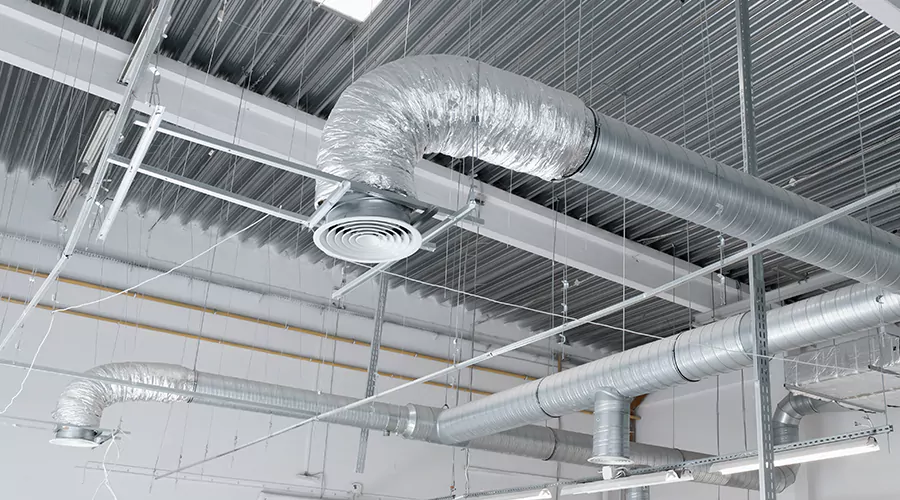
You can fix AC duct condensation by reducing excess humidity, sealing air leaks and restoring damaged duct insulation with a suitable vapor barrier. Condensation forms when humid air contacts a duct surface colder than its dew point. In 2026, professional condensation-related duct repairs commonly cost $200 to $900, depending on the affected components.
AC duct condensation is often called duct sweating because water droplets form on cold duct surfaces. The problem is especially noticeable when air conditioning ducts run through hot attics or humid crawlspaces. Moisture may collect on the outside of the duct or around a supply register, eventually affecting insulation and nearby building materials.
The correct solution depends on where water is forming and why the surface is getting wet. Adding insulation may correct one problem, while a damaged condensate drain requires a different repair. Identifying the source before covering the duct helps prevent trapped moisture and repeated damage.
What Causes Condensation on AC Ducts?
AC duct condensation develops when warm humid air reaches a surface that is colder than the air's dew point. Poor insulation and damaged vapor barriers commonly create these conditions. Air leaks can also allow humid air to reach cold surfaces, while high indoor humidity increases the likelihood of moisture forming.
Missing or Damaged Duct Insulation
Supply ducts carry cooled air from the air conditioner to occupied rooms. When a duct passes through an unconditioned attic or crawlspace, the surrounding air may be much warmer than the air inside it. Without suitable insulation, the exterior metal can become cold enough for condensation to form.
Damaged insulation creates similar problems by exposing cold sections of ductwork. A small opening in the insulation covering can allow humid air to contact the metal surface. Moisture may then collect at the exposed area and spread into surrounding insulation.
Replacing only the visibly damaged outer covering may not solve the problem if the insulation beneath it is wet. The affected material should be evaluated and dried or replaced before the protective layer is restored.
Gaps in the Vapor Barrier
Cooling duct insulation often includes an outer vapor-retarding layer that helps prevent humid air from entering the insulation system. When this covering contains unsealed seams or punctures, moisture can reach colder surfaces beneath it. Condensation may develop inside the insulation even when the outside appears relatively dry.
A continuous vapor barrier is particularly important in humid environments because water vapor moves toward colder areas under suitable conditions. Simply wrapping additional insulation around a damaged section can trap moisture if the underlying material is already wet. The insulation and its protective covering must work together.
High Indoor Humidity
High indoor humidity increases the dew point of room air and makes condensation more likely on cold surfaces. Showers and indoor moisture sources can contribute to elevated humidity when ventilation is inadequate. A cold supply grille may develop water droplets even when the duct behind it is properly insulated.
Maintaining indoor relative humidity around 30% to 50% is a useful general target for many homes. However, humidity should be evaluated alongside actual condensation conditions. A room can have acceptable humidity while a poorly insulated metal connection still becomes cold enough to collect moisture.
Air Leaks Around Duct Connections
Leaks at duct joints can contribute to condensation by changing how humid air interacts with cold surfaces. Supply-side gaps may release cooled air into surrounding cavities, while return-side leaks may draw humid air from unconditioned spaces. Both problems can affect the temperature and moisture conditions around ductwork. Our duct sealing service addresses these gaps before they lead to moisture problems.
A gap at the connection between a ceiling register and the duct boot can create localized sweating. Humid air entering the opening may contact cold metal and produce water droplets around the grille. Sealing the connection can help address this condition when leakage is the cause.
Poorly Drained Cooling Equipment
Water near the air handler is not always condensation forming on duct surfaces. Air conditioners naturally collect moisture at the evaporator coil and direct it through a condensate drainage system. A clogged line or overflowing drain pan can release water near connected ductwork.
This problem can resemble duct sweating because the surrounding insulation may become wet. However, adding duct insulation will not correct a blocked condensate drain. The water's actual source must be identified before choosing a repair.
Why Do AC Ducts Sweat More in Attics and Crawlspaces?
AC ducts are particularly vulnerable to condensation in unconditioned spaces because the surrounding air can have a different temperature and humidity level from the cooled air inside the duct. The larger the moisture and temperature difference, the greater the potential for condensation when insulation is inadequate.
During summer, an attic can become much hotter than the living space below it. If humid air reaches an exposed cold supply duct, water may collect on its surface. Damaged insulation or unsealed vapor-barrier seams can allow the same problem to occur beneath the outer covering.
Crawlspaces create different moisture conditions. Damp soil and water intrusion can keep the surrounding air humid, especially where moisture control is poor. A cold duct running through that environment may collect water if its insulation does not prevent humid air from reaching the cold surface.
The repair should account for the surrounding space as well as the duct itself. Restoring insulation may not provide lasting control when a crawlspace contains an unresolved water problem. Likewise, repairing a duct in an attic without sealing damaged connections can leave unwanted moisture paths open.
How Can You Tell Condensation From an AC Duct Leak?
Condensation and duct air leakage can occur together, but they are different problems. Condensation involves water forming on cold surfaces, while an air leak involves conditioned air moving through an unintended opening. A water leak from a condensate drain or roof can also produce dampness near the duct.
The timing and location of the water provide useful clues. Droplets appearing only while the air conditioner runs may suggest condensation. Water continuing to spread when cooling is off may indicate a different moisture source.
| Observation | Possible Cause | What to Check |
|---|---|---|
| Droplets on exposed cold metal | Surface condensation | Insulation and surrounding humidity |
| Wet insulation beneath damaged covering | Vapor barrier failure or condensation | Insulation condition |
| Water around ceiling register | Cold boot or humid air leakage | Register connection and room humidity |
| Water beneath air handler | Drain pan or condensate line problem | Cooling equipment drainage |
| Staining after rain | Roof or building water intrusion | Nearby building materials |
| Air escaping from a duct seam | Duct air leakage | Joint sealing condition |
| Damp crawlspace and sweating ducts | High surrounding humidity | Crawlspace moisture sources |
A cold duct can leak air without developing condensation. Similarly, a properly sealed duct can sweat when its insulation is inadequate. The distinction matters because repairing an air leak does not automatically restore thermal insulation.
What Are the Warning Signs of AC Duct Condensation?
Condensation problems may begin with small water droplets and become more noticeable when moisture reaches insulation or building materials. Persistent dampness can damage duct coverings and nearby surfaces. The severity depends on how long the material remains wet and whether the underlying conditions continue.
Look for these 10 warning signs:
- Water droplets repeatedly form on exposed AC duct surfaces.
- Insulation around supply ducts feels damp or appears discolored.
- The foil-faced insulation covering contains gaps or tears.
- Water stains develop around ceiling supply registers.
- Paint begins peeling near a cold vent opening.
- Moisture collects at duct joints during cooling operation.
- Metal duct surfaces show new signs of corrosion.
- Musty odors occur near consistently damp insulation.
- Water appears around the air handler during cooling.
- The same condensation returns after surfaces have been dried.
These warning signs do not all identify the same moisture source. Water beneath an air handler may originate from drainage equipment, while droplets on exposed duct metal are more consistent with surface condensation. Checking the location and timing helps determine which repair is appropriate.
How to Fix AC Duct Condensation Step by Step?
Fixing AC duct condensation requires locating the wet area and correcting the condition that allows humid air to contact a cold surface. The process may involve restoring duct insulation and sealing appropriate openings. Any material already saturated with water must be addressed before the system is enclosed again.
Step 1. Find Where the Water Is Forming
Begin by identifying whether moisture is collecting on the exterior duct surface or entering from another source. Check safely accessible ductwork and photograph wet areas before making changes. Note whether the problem appears during cooling or continues when the air conditioner is off.
Inspect nearby building materials for signs of a roof or plumbing leak. A stained ceiling does not automatically mean the duct is sweating because water can travel through concealed cavities. The repair should follow the actual source of moisture.
Step 2. Measure Indoor Humidity
Use a digital hygrometer to measure relative humidity in the affected room. Check readings at different times because humidity can change after showers or other activities. Repeated high readings increase the likelihood of condensation on cold surfaces.
If indoor humidity is elevated, improve moisture removal using the home's existing ventilation and suitable humidity control. A properly operating air conditioner should remove moisture during normal cooling, but an oversized or poorly controlled system may not dehumidify effectively under certain conditions. Humidity should be controlled without making unnecessary changes to the cooling equipment.
Step 3. Inspect the Duct Insulation
Turn off the HVAC system before closely examining an accessible insulation covering. Look for exposed metal or sections where the foil-facing has separated. Damaged areas may allow humid air to reach the cold duct beneath.
Avoid tearing insulation apart unnecessarily because doing so can create additional openings. If the material is wet, assess whether it can be dried and restored or needs replacement. Installing new insulation over saturated material can trap water against the duct.
Step 4. Check for Air Leaks
Examine accessible joints for gaps and damaged seals. A supply-side opening may release cool air into an attic or wall cavity, while a poorly sealed boot can affect conditions around the grille. Any mechanically loose connection must be secured before sealing.
Use HVAC-rated mastic or approved foil tape for appropriate duct joints. Ordinary cloth-backed duct tape is not recommended for long-term sealing. Follow the product's instructions and avoid covering unrelated mechanical components.
Step 5. Restore Suitable Duct Insulation
Once the duct is dry and structurally sound, restore the insulation using material appropriate for its location. ENERGY STAR recommends insulation rated R-6 or higher for many ducts running through unconditioned spaces, although local codes and specific installations may require different levels.
The insulation should fit properly around the duct and cover relevant fittings. Gaps can expose small areas of cold metal that continue collecting water. A complete repair should address the full affected connection rather than cover only the most visible wet spot.
Step 6. Seal the Vapor-Retarding Layer
The outer vapor-retarding layer must remain continuous so humid air cannot easily enter the insulation system. Follow the insulation manufacturer's requirements for sealing seams and joints. Materials designed for ordinary duct air leakage are not automatically suitable for every vapor-barrier application.
Pay attention to elbows and duct boots because their irregular shapes can be difficult to cover. An opening at a fitting may allow moisture to enter even when straight duct sections are well insulated. The finished covering should protect the insulation without trapping preexisting water.
Step 7. Check the Results During Cooling
After the repair is complete and the materials are ready for service, restore normal cooling operation. Observe the affected area under conditions similar to those that previously caused sweating. The exterior surface should remain dry when the insulation and moisture conditions are appropriate.
A brief inspection immediately after startup may not reveal every problem. Condensation can develop during periods of high humidity or long cooling cycles, so monitoring over several days provides more useful information. If water returns, another moisture source or insulation defect may remain.
How Do You Fix Condensation Around Ceiling AC Vents?
Condensation around a ceiling register may result from a cold metal boot or grille coming into contact with humid indoor air. The problem is often localized near the opening rather than spread across the entire duct branch. Correcting the conditions around the boot can help prevent repeated staining.
Begin by checking whether the grille itself is becoming wet during cooling. If droplets form on the exposed cover, evaluate indoor humidity and airflow conditions. Persistent moisture around the surrounding drywall may indicate that the boot connection or nearby insulation needs attention.
A poorly sealed gap between the register boot and ceiling can allow humid air to reach cold surfaces. Sealing that connection with suitable materials may reduce unwanted air exchange. However, the grille opening must remain unobstructed so conditioned air can still enter the room normally.
If paint has begun peeling, correct the moisture problem before refinishing the surface. Painting over damp drywall can conceal continuing damage. Any material that has become severely water-damaged should be evaluated for appropriate repair or replacement.
Can You Fix AC Duct Condensation Without Replacing the Ducts?
Many condensation problems can be corrected without replacing the actual air-carrying duct. If the metal remains sound, restoring insulation or sealing a vapor-barrier gap may be sufficient. Replacement becomes more likely when prolonged moisture has damaged internal materials or weakened the duct itself.
| Condition | Likely Solution | Is Duct Replacement Usually Necessary? |
|---|---|---|
| Exposed sound metal duct | Restore suitable insulation | Usually no |
| Torn vapor barrier over dry insulation | Repair compatible vapor-retarding layer | Usually no |
| Small air leak near a joint | Secure and seal connection | Usually no |
| Wet exterior insulation | Dry or replace affected insulation | Not necessarily |
| Corroded duct with holes | Patch or replace damaged section | Depends on metal condition |
| Severely damaged insulated flex duct | Replace affected section | Often yes |
| Water from clogged condensate drain | Correct drainage | Usually no duct replacement |
The affected material is more important than the presence of water alone. Sound sheet metal may remain usable after moisture is corrected, while contaminated porous insulation can require removal. Repairing only the insulation covering is not sufficient when the underlying duct has structurally deteriorated.
What Happens if AC Duct Condensation Is Ignored?
Ongoing condensation can damage insulation and surrounding building materials. Water may collect beneath duct coverings or drip onto ceiling drywall, eventually causing staining and deterioration. The rate of damage depends on how often the surface becomes wet and whether it has an opportunity to dry.
Repeated moisture exposure can also contribute to corrosion on susceptible metal surfaces. Damaged insulation may become less effective when saturated, creating conditions where condensation continues. This can turn a localized insulation problem into a larger repair involving additional duct sections.
Persistent dampness can support mold growth on suitable materials. Mold may begin developing within 24 to 48 hours under favorable conditions, although visible growth does not follow a fixed timetable. Correcting unwanted moisture promptly reduces the likelihood of extensive material damage.
Condensation should not automatically be treated as evidence that an entire duct system contains mold. The affected surfaces and moisture source must be identified before deciding whether cleaning or replacement is necessary.
How Much Does AC Duct Condensation Repair Cost in 2026?
Professional repairs for duct condensation commonly cost $200 to $900 in the United States during 2026. This broad range includes different levels of work, from addressing localized moisture problems to repairing affected duct components. Costs become higher when insulation or surrounding building materials require replacement.
| Repair or Service | Estimated 2026 U.S. Cost |
|---|---|
| Condensation-related duct repair | $200 to $900 |
| Repairing damaged duct insulation | $200 to $800 |
| Sealing a leaking duct connection | $375 to $700 |
| Localized rust or corrosion repair | $200 to $500 |
| General ductwork repairs | $200 to $2,100 |
| Replacement of a damaged duct section | $400 to $1,500 |
These figures describe different repairs rather than separate charges that always apply together. A project may involve only insulation repair, while another may require correcting a leak and replacing damaged materials. The final estimate should explain which condition is responsible for the moisture.
Water damage outside the HVAC system can also increase the total cost. Repairing stained drywall or correcting a roof leak is different from insulating a duct. Identifying those separate tasks helps prevent misunderstandings about the scope of work.
When Should You Call an HVAC Professional?
Professional evaluation is appropriate when condensation repeatedly returns or insulation remains wet after the visible surface has been dried. Moisture affecting concealed ductwork also requires investigation because the full extent of damage may not be visible. A technician can evaluate insulation and airflow conditions that are difficult to assess through household observation.
An HVAC technician can check whether damaged duct connections are contributing to moisture problems. The assessment may also include examining cooling equipment when water appears near the air handler. A blocked condensate drain requires a different repair from an exposed metal duct that is sweating.
Professional attention is particularly important when extensive corrosion or suspected mold contamination has developed. Wet or moldy internal fiberglass insulation may require replacement rather than surface cleaning. The repair should restore dry conditions without introducing new airflow restrictions.
How Can You Prevent AC Duct Condensation From Returning?
Preventing AC duct condensation requires controlling moisture around cold duct surfaces. Proper insulation and continuous vapor-retarding coverings help prevent humid air from reaching the metal. Maintaining drainage and monitoring indoor humidity provide additional protection against recurring water problems.
Inspect Duct Insulation Seasonally
Check safely accessible supply ducts before periods of heavy cooling use. Look for torn exterior coverings and gaps around fittings. Address damaged sections before repeated condensation affects the surrounding insulation or duct material.
Maintain Indoor Moisture Control
Use a hygrometer to monitor indoor humidity during humid weather. Run bathroom exhaust ventilation during showers and address sources of persistent dampness. A suitable humidity level reduces the likelihood of condensation around cold registers and ducts.
Keep Duct Connections Properly Sealed
Inspect accessible joints for separation or damaged sealant. Properly secured and sealed ducts reduce unwanted air exchange with attics or crawlspaces. Duct sealing should be completed before restoring insulation where the connection is damaged.
Maintain Cooling Equipment Drainage
Follow the air conditioner's maintenance schedule and watch for unusual water accumulation around accessible drainage areas. A clogged condensate line can create moisture problems that resemble duct sweating. Correcting drainage issues promptly prevents water from affecting nearby components.
Conclusion
Fixing AC duct condensation requires identifying why humid air is reaching cold surfaces. Damaged insulation and vapor barriers are common causes, while duct leaks and drainage problems may also contribute. The correct repair should stop moisture without trapping water inside insulation. Persistent sweating or damaged materials may need professional evaluation. This week, inspect accessible AC ducts for wet insulation and recurring condensation.